


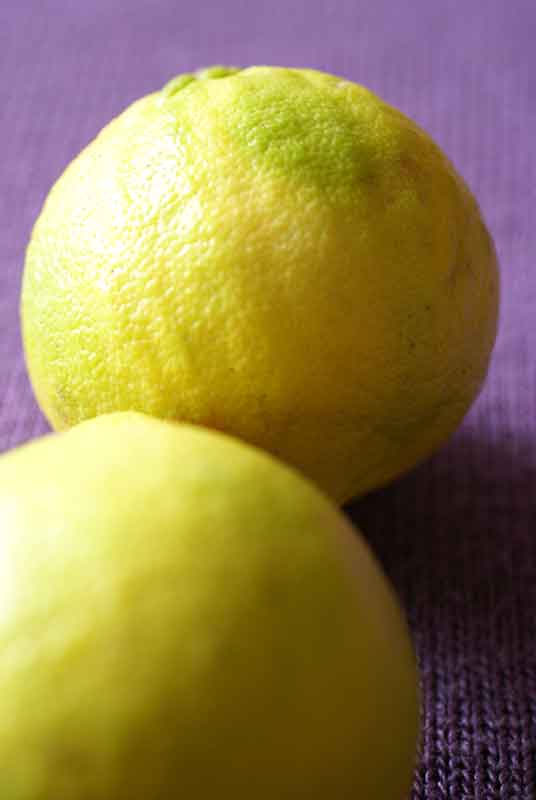
A week or so ago a friend who follows Saucy Dressings wrote to me asking
“I wondered, have you ever done anything with bergamots? …Wonderful, in my opinion! How I wish bergamots were in season for longer – I love them in so many ways…
- from eating them as I would an orange,
- to a simple squeeze over a tin of tuna
- or even better, combine a squeeze of bergamot with a grinding of my pepper-mill mix (black peppercorns, pink peppercorns and a few sechuan for good measure) and a decent spoonful of cream cheese, quite delicious as a filling…
- or take a chicken breast, loosely wrapped in foil with a slice of butter and a wedge of the lovely fruit and again the pepper; steam in the butter, bergamot and natural meat juices, and then drizzle over a lovely nutty rice mix – just outstanding…
- or, for a special dessert-meets-cocktail, shaved ice packed into a vessel of choice, a nice dash of absinthe (verte works best for me with this), trailed over with hot maple syrup and a generous squeeze of bergamot, garnished with a slice of bergamot and a hibiscus flower…I could go on… “
I was intrigued. Really, I knew nothing about bergamots except that they provide a key flavour to Earl Grey (and Lady Grey) tea. I was very excited to read on and see her generous offer:
“…actually I just remembered, there are still two in my fridge so do let me know if you’ve not tried them but would like to, as I could easily post you one on super-quick delivery, would be happy to!”
Naturally I replied, “YES, please!”
In terms of size and shape a Bergamot is more like a small orange, but in terms of colour it’s more like a lemon. In terms of taste it’s less sour than a lemon, but sourer than a grapefruit and a little floral. Daniel Patterson, founder of the Coi restaurant in San Francisco, and a chef of great influence in the US describes it as smelling
“like grapefruit layered with notes of white pepper and dust, reminiscent of the musty formality of a stately old home. But the most thrilling part of fresh bergamot is the juice—it is bracingly, ferociously sour, similar to that of the Seville orange. In fact, the flavor is so intense that if you use a juicer, it’s important to press the fruit gently, without squeezing the rind too much, to avoid making juice that’s excessively bitter.”
80% of the world’s crop is grown in Reggio in Southern Italy. Reading up on the fruit in Helena Attlee’s scholarly The Land Where Lemons Grow I discover that the bergamot is the result of a natural cross-pollination between a lemon tree and a sour orange. Curiously, she describes:
“bergamot is like an animal in its chosen territory: it thrives and fruits successfully only on a thin strip of costline that runs for seventy-five kilometres from Villa San Giovanni on the Tyrrhenian cost to Brancaleone on the shores of the Ionian Sea. Here the tree grows tall and strong, and bears such heavy crops that its brittle branches often snap under the weight of the oily fruit.”
Essential oil derived from fruit elsewhere, she writes, is always inferior. So in terms of growing then, this is one not to try at home.
Bergamots aren’t just used to flavour tea – Wikipedia relates that about half of women’s scent contains essential oil of bergamot, some of the best examples of which are:
- Shalimar – a wonderful old-fashioned scent by classic parfumier Guerlain

Shalimar also includes iris, jasmine, rose and vanilla… - Youth Dew – my sister’s favourite scent, by Estee Lauder
- Black Citrus by Vilheim Parfumerie – its maker describes this as ‘a clean breath of London after rainfall’
- Jicky – another Guerlain fragrance
- 4711 cologne by Farina – the scent of my grandmother
- Jean Marine Farina by Roget & Gallet
- Eau Sauvage by Dior
- La Pausa by Chanel
- Sakura Cherry Blossom by Jo Malone – also with rose and cherry blossom
- Entre Naranjos by Ramon Monegal – bergamot with yuzu, orange and grapefruit – if you like citrus, then this is the one for you
- Bergamote from The Different Company
- and last, but certainly not least, is the mighty Vetiver Imperiale at £245 per 100ml. Its producers describe it thus,“In partnership with luxury food magazine FOUR and Michelin starred chef Jason Atherton, Boadicea the Victorious are thrilled to present a scent that contains the chef’s most treasured ingredients.
Vetiver Imperiale is a unisex fragrance that displays the fresh and citrusy crispness of vetiver and bergamot, combined with the sweet spiciness of Tunisian neroli, and balanced with deep notes of Atlas cedarwood and amber. Black, white and pink pepper provide a touch of spice and excitement. Whilst Moroccan rose, Egyptian geranium and patchouli add an uplifting quality to the fragrance. It is a warm yet bight pure perfume; an inspiring and passionate scent that promises to provide utter escapism.”

But I digress…. Let’s get back to the kitchen. It’s the zest and peel which is possibly the most useful part of the fruit so a source which provides them unwaxed is important. Bergamots have a short season – they’re available in December and January, sometimes from Waitrose or Ocado, or more reliably they are available, unwaxed, from Natoora.
Don’t get confused (especially when you’re in France) by a mistaken use of the word ‘begamot’ which does not refer to the true bergamo (citrus bergamia is the scientific name, bergamotto in Italian) but instead to ‘citrons doux’, sweet lemons, or citrus limetta which are sweeter than normal lemons and slightly orangey rather than citrus lemon as ordinary lemons are.
I’m especially keen on bergamot since I have high cholesterol but can’t take statins. A recent (2014) study carried out at the University of Calabria determined limonoids in bergamot fruit for the first time (especially strongly in the peel and pips – 80% of the limonoid aglycones of the fruit were in the peel). The enzymes in the limonoids in the bergamot can help to control heart disease.
In addition to the terrific ideas given at the top of this post here are some other ideas, many using the zest or peel. Bear in mind that because it is so sour you cannot reduce the juice and in the case marmalade and curd it’s best to dilute it with a sweeter citrus:
- With fish
- With foie gras – or chicken liver pâté
- To make an intriguing alternative to lemon curd (mix with lemons)
- Use your bergamot curd to make an amazing ice cream
- or use your bergamot curd to make a truly outstanding bergamot meringue pie
- To make vodka, and then incorporate into a vodka martini
- To make marmalade – it’s too sour on its own, so use it to add layers of flavour to other citrus marmalades
- In Turkish delight
- Use the zest to infuse a panna cotta
- In madeleines
- As described by Daniel Patterson (a chef in San Francisco) to make a vinaigrette for a beetroot salad, and they are also excellent for dressing sardines
- Bergamot custard cups – as described by Lucy Vaserfirer on her blog
- To make a sorbet (follow this link for Rosie Ramsden’s recipe or a granita – go here for Red Magazine’s version – this is one of the best uses. As Nigel Slater explains:
“The top notes of the fruit are difficult to capture in a mousse, or even the most barely cooked curd, but you can harness them in the frozen crystals of a sorbet. They are, in must be said, for serious lemon aficionados only.”
This post is dedicated to Anna-Lucia Stone