


“Last time, though, a bid from my teenage daughter gave me pause: ‘Get a couple of blocks of cheddar . . . and maybe get some cheese as well . . . ’ You could, of course, attribute this to adolescent weirdness and no one could blame you, but I really understood. The commodity block cheddar we buy at the supermarket has become a sort of category all of its own.”
Tim Hayward, The Financial Times, March 11 2021
Tim Hayward then goes on to say that we can become a bit too precious about food. Supermarket cheddar transforms toast, jacket potatoes, and cauliflower cheese. It salves the midnight munchies. It’s not expensive and it’s easy to find. It very effectively fulfills a need.
Hayward’s daughter’s comment didn’t just give him pause, it gave me pause too, but my thoughts started to run along a different rail network altogether. Agreed, cheddar is so all-purpose, so ubiquitous, that it deserves to be lauded as an entity in its own right. But something on a lesser scale has happened to other great cheeses, most of them from France, Italy, Spain, Switzerland and The Netherlands. And this isn’t necessarily quite such a good thing.
Take Gruyère, for example. This has become a term used in recipes as being synonymous with ‘melting cheese’ – it has ceased to mean, specifically, a mountain cows’ cheese coming from a particular part of western Switzerland. Parmesan (rather than its correct name, Parmigiano-Reggiano) is a term which has come to mean ‘cheese you grate over pasta…and pretty much everything else’. Feta has come to mean ‘salty, crumbly, white cheese, plonked onto a salad’.
This is not good news for those of us living in Britain. Why?
Recently I was bemoaning the impossibility, post-Brexit, of getting Stitchelton in Europe with its cheesemaker, Joe Schneider. I was by far not the first he assured me. He tried to find a wholesaler for me, but without success.
The door has clanged shut for British cheesemakers looking to export. To be fair, the European market has always been limited: selling cheese to a Frenchman proud of his Roquefort and Bries; to a Dutchman, happy with his Goudas and Edams; or to an Italian, comfortably familiar with his Parmigiano and Gorgonzola, is uphill work. But it means that now the home market is more important than ever.
And all those continental cheeses have had the advantage of a start of several centuries to build up brand recognition in Blighty. So, many people continue to buy them simply because they aren’t aware of the local alternatives.
And by golly, what alternatives they are! If you live in the UK, now is the moment to support the nascent, native cheese industry, and enjoy the treat of exploring the treasure on offer.
Below we give a list of British cheeses you might want to try instead of the continental ‘standards’. They are not better, or worse, and most aren’t straight substitutes. Every cheese has its own personality. The intention is solely to open up horizons, and support an industry supplying some outstanding produce. These are not rigid guidelines, just suggestions.
Bear in mind
- The list doesn’t include the many excellent cheeses which are just completely ‘themselves’, unlike anything else.
- Cheese is a natural product, it varies according to many factors, including the season, the weather, and the conditions in which it’s kept.
The List – continental greats, and alternative British cheeses to try
Appenzeller
- The Westray Wife, made in Orkney, the most northerly creamery in the UK.
Brebis
- Try a Berkswell, from Coventry
Brie
- Somerset Brie, made by Lubborn Cheese
- Sussex Brie
- Burland Broom
- Baron Bigod
- Wigmore


Brillat Savarin
- Bix, a triple-cream cheese
Burrata
- Burrata from La Latteria – a London creamery
Camembert
- Try a Tunworth, truffley, garlicky…. great heated in a ceramic container
- Cote Hill Blue, is rich and creamy like a Camembert, but it is, of course, a blue cheese
- Sussex Camembert, won Gold with two stars at The Great Taste Awards
- Winslade, a cross between a Vacherin Mont d’Or and a camembert


Cantal
- Some people think the Romans took Cantal cheese to Britain…. where it became cheddar. Whether or not that is true, Cheddar is probably the nearest equivalent these days.
For a post on Cantal cheese, follow this link.


Chaorce
- Bix, a triple-cream cheese
Chimay, and other monastic washed-rind cheeses
- Renegade Monk is washed with Funky Monkey ale – it’s a hybrid cheese between a soft white and a blue
- Maida Vale is also washed in a local ale
For a post on washed-rind cheeses, follow this link.
Comté
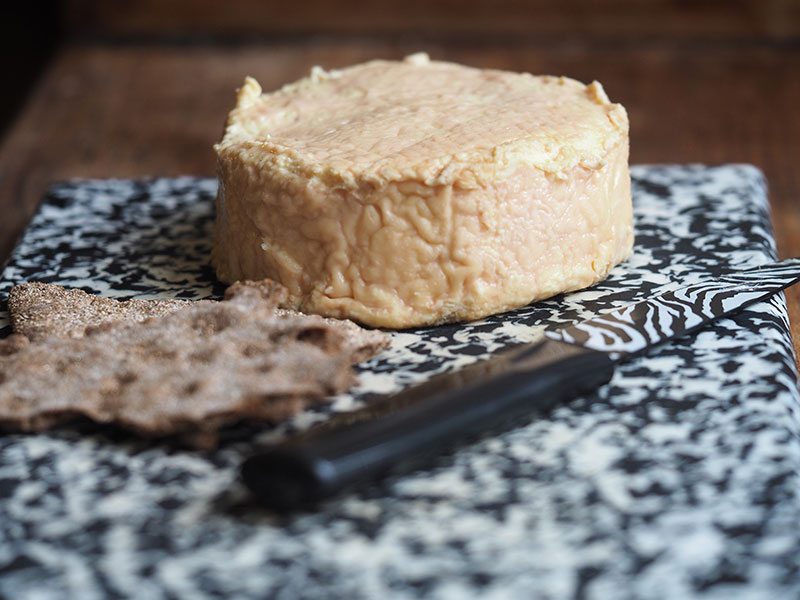
- Try Cornish Kern, buttery, caramel notes – a World Cheese Supreme Champion
- Witheridge in Hay, has the sweetness and umami notes of an Alpine cheese
- Lincolnshire Poacher also works well as a substitute.
For a post on Comté, follow this link.

Edam
- Try a mild cheddar
Emmental
Epoisses
- Try Oxford Isis – for a post on this cheese go to Oxford Isis, A Muhammed Ali of a Cheese
- Or Golden Cenarth, which is a sort of cross between a Reblochon and Epoisses
- Or St Cera, basically this is a St Jude (see St Marcellin) with a brine-washed rind.


Feta (Greek feta is made from ewes’ or goats’ milk)
- Graceburn cheese, comes already marinated, but it is cows’ milk. Made to a Persian recipe
- Yorkshire Fettle, made by Shepherd’s Purse from ewes’ milk, slightly lemony
- London Fettle, ‘the whey when young smells of vanilla ice cream’. Made by Kupros Dairy in London
- Briddlesford feta-style, made in the Isle of Wight from cows’ milk
- Battenhurst, hard, crumbly and salty, made from ewes’ milk
- Pickled ewe’s cheese
- Fetish
- Sussex Medita
- Or try a light, tangy, crumbly Cheshire


Gorgonzola
- Beauvale is a sort of cross between a Stilton and a Gorgonzola
- Rebel Nun is like a young Gorgonzola, or a Dolcelatte
Gouda (for 18 months mature Gouda see, Mimolette)
- Coolea, ‘hints of caramel, butterscotch and honey’
- Cornish Gouda
- Bybrook
- Wyfe of Bath – for a post describing a visit to The Bath Soft Cheese Company, where this cheese is made, follow this link.


Gruyère
- Try Summer Field Alpine (a vegetarian cheese)
- Two cheeses made by Anne Clayton, of Larkton Hall, described as ‘Gruyère meets Cheshire’. Both are’ grassy, buttery and smooth’. Crabtree is gentler and softer; while the more mature Federia is richer and firmer. I can’t find a website for this dairy, but they do have a Facebook page.
- Try a Bermondsey hard pressed cheese, alpine-style, nutty, made like Gruyère. Try it grated over asparagus, or roasted butternut squash
- Or Lincolnshire Poacher Double Barrelled, which is like a cross between cheddar and an aged Gruyère . For a post about Lincolnshire Poacher, follow this link.


Halloumi
For a post on halloumi, follow this link.


“There were rectangles of fried halloumi, made from goat’s and ewe’s milk, arguably the island’s most famous export and undoubtedly the world’s favourite squeaky cheese.”
Yasmin Khan, The Financial Times
Langres
- Edmund Tew, cows’ milk with a light brine washing, earthy and malty
L’Etivaz
Try Bermondsey Hard Pressed, made in a copper vat imported from Switzerland


Manchego (or the softer and milder Ossau Iraty)
- Try Lord of the Hundreds
- Corra Linn (made from ewes’ milk)
- Berkswell, a hard ewes’ milk cheese
- Dorset Crofter, by Ford Farm
- Ewe eat me, nutty undertones, red rind
For a post on Lord of the Hundreds and Corra Linn, follow this link.
For a post on Ossau Iraty, follow this link.


Mimolette
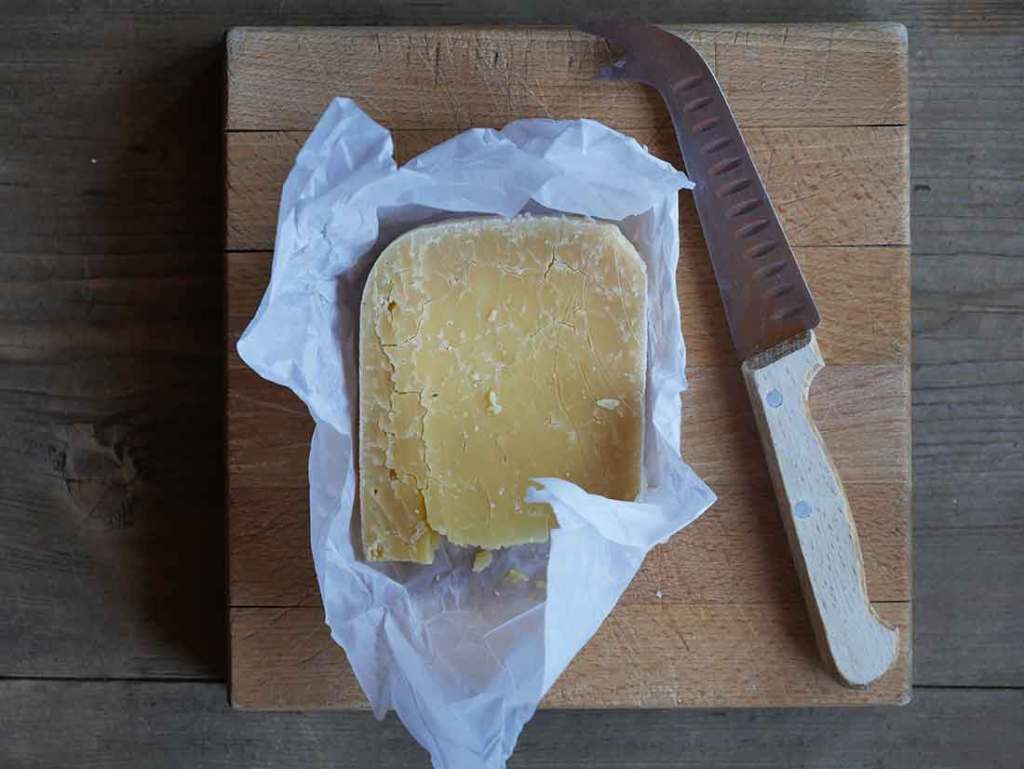
- Old Winchester, not quite so caramelly.
Morbier
- Ashcombe, which also has a striking line of wood ash running through it.


Mozzarella
- Hampshire Buffalo Mozzarella
- Mozzarella fior di latte from La Latteria
For an interview with Simona Di Vietri, founder and Managing Director of La Latteria, follow this link.


Münster
- try Rollright
Parmeggiano, Grana Padano
- Sussex Charmer – love child of Parmesan and cheddar
- Old Winchester, a vegetarian cheese
- Twineham Grange Italian Style Premium Cheese, also vegetarian
- Doddington – this cheese has the hardness of a cheddar, but, dependent on the batch, it can have the umami, ‘brothy’ taste of Parmesan.
“Doddington: the ultimate, slightly granular, sweet hard cheese with crazy depth of flavour.”
Thomasina Miers, when asked for her dessert island cheese by Phil Daoust, The Guardian
For a post on the difference between Parmeggiano and Grana Padano, follow this link.


Pave d’Auge – a square, flat, washed rind cows’ milk cheese
- Try a Highmoor, from Nettlebed Creamery
Pecorino
- Spenwood is made by Anne Wigmore who was inspired by a visit to Sardinia. It’s made with ewes’ milk, but in Berkshire where the weather and pasture is a bit different.
- Yorkshire Pecorino Fresco, made by Mario Olianas, is only 30 days old.

Pouligny-St-Pierre
Try Sinodun Hill

Raclette
- Try Ogleshield, a brine-washed cheese created by Jamie Montgomery, with a sweet, milky scent
- Or Raclette from the Kappacasein Dairy
Reblochon
- Try Rollright – also a little like a mild Munster
- Baronet, whose rind is brine-washed and rubbed in the same style as Reblochon
- Golden Cenarth, nutty flavour, pairs well with beer, bakes well
- Minger – the Scottish makers describe this as “orange annatto soft washed rind, Minger is a direct rip off from our friends across the channel, a mimic of Reblochon/Pont-l’Eveque – the desire is to produce a meaty protein substitute, unctuous in texture and taste.”


Ricotta
- Yorkshire Dama Ricotta
- Ricotta from La Latteria
- Westcombe Ricotta
- Ricotta made by Homewood
- Yorkshire Ricotta
- Ricotta from the Kappacasein Dairy

Roquefort
- Beenleigh Blue is made to a Roquefort-inspired recipe, but is a bit different… lemony, more crumbly
- Harbourne Blue, is also made to a Roquefort-inspired recipe, but uses goats’ milk rather than ewes’ milk, and is therefore also rather different. Both Beenleigh and Harbourne Blues are made by Ticklemore.
- Lanark Blue is a Scottish cheese…. better than Roquefort in the Saucy Dressings team opinion!

Sainte-Maure de Touraine or Riblaire St Varent, (goat cheese log)
- Try Ragstone, richly creamy with a pearly-white rind. Tangy and citric. Quite strong.
- Or Stonegate, delicate and creamy – go here for a blogspot on this cheese
- Dorstone, goat cheese rolled in ash
- Elrick Log, also rolled in ash
- Innes Log
- Golden Cross
- Driftwood from White Lake Cheese
- Kidderton Ash
For a post on Riblaire St Varent, follow this link.


Saint-Marcellin
- Try St Jude, soft, almost mousse-like
Selles-sur-Cher
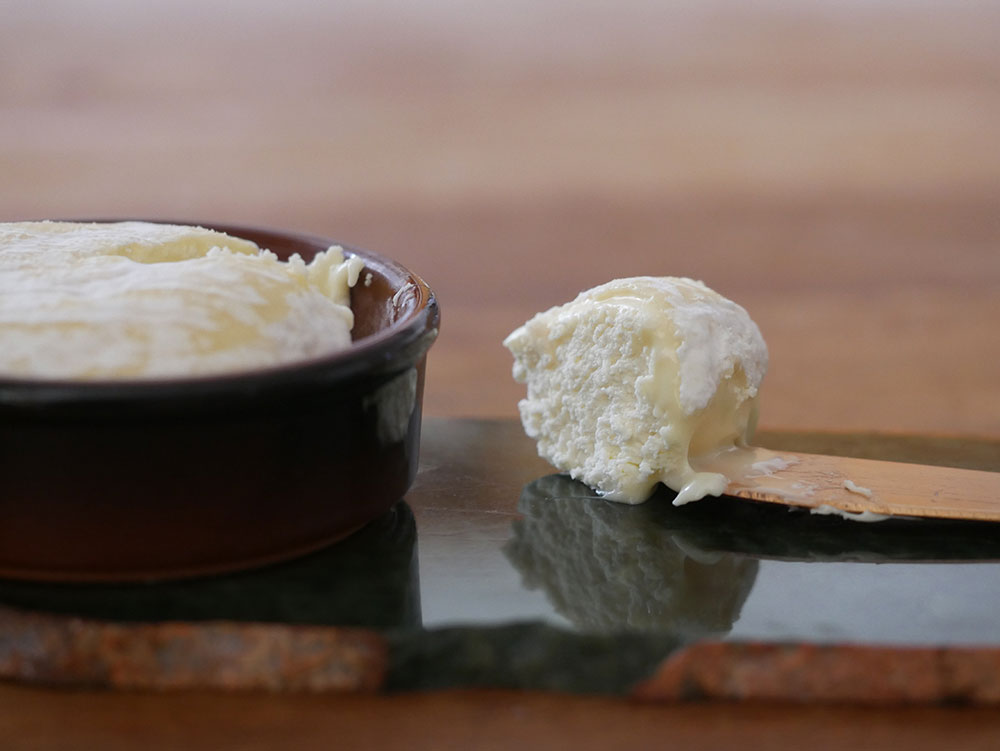
- Hay-on-wye, made by Charlie Westhead at the Neal’s Yard Creamery in Herefordshire, goats’ cheese
Stracciatella
- Stracciatella from La Latteria
Taleggio
Try a St James

Tomme
- Moreton, from King Stone Dairy
Vacherin Mont d’Or
Try a Winslade, a cross between a Camembert style cheese and a Vacherin Mont d’Or. For a post on Winslade, follow this link.
Or try a Little Rollright.

Valençay – goats cheese, pyramid shape
- Try Cerney Ash
- Tor – made by White Lake in Somerset, delicate lemony taste when young…more ‘goaty’ when more mature
- Sinidun Hill, yoghurt flavour
- Blackmount
- Pavé Cobble
- Lypiatt – this is a round cheese
For a post on Pavé Cobble, follow this link.


